
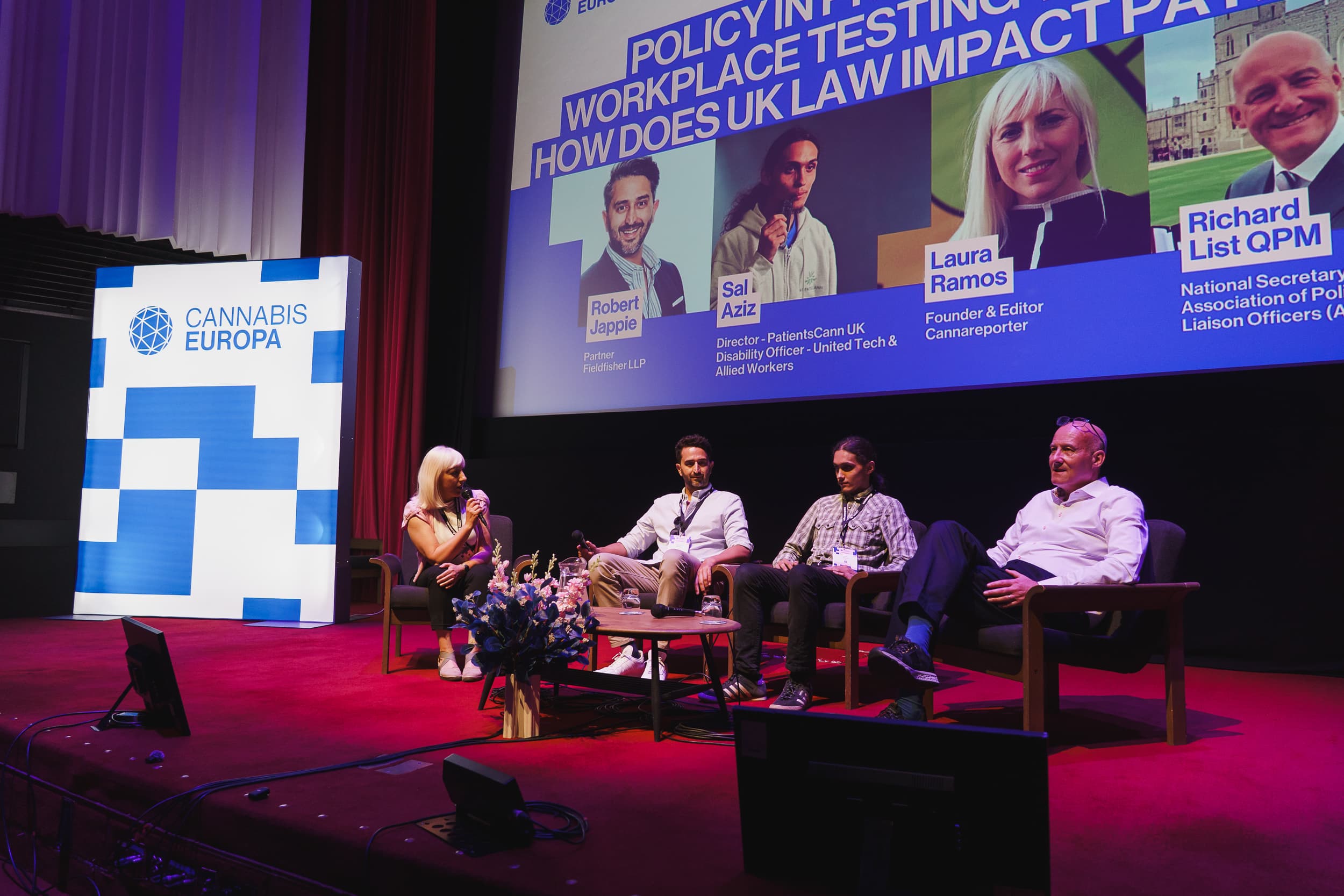
Europe's cannabis regulatory landscape is moving faster than any single report can track. Here is an analytical case for why senior professionals in the cannabis industry still find in-person conference attendance the highest-return use of their professional development time.
- Regulatory intelligence in European cannabis is time-sensitive and often not available in published form — conferences are where it surfaces first.
- The cannabis sector remains relationship-driven; deal flow, partnerships and investment conversations require in-person trust-building that digital channels cannot replicate.
- In 2026, the European market is at a genuine inflection point — Germany's Cannabis Act, Swiss pilot results, UK private market development — making a single well-chosen conference a higher-ROI investment than in more stable industries.
The 2026 Landscape
The European cannabis industry in 2026 is navigating a period of simultaneous regulatory acceleration across multiple jurisdictions. Germany's Cannabis Act is being implemented and stress-tested. Switzerland's adult-use pilots are generating the first robust European evidence on regulated markets. France's permanent medical programme is scaling. The UK's private CBMP market is growing while NHS access remains constrained. Czech adult-use reform is moving through implementation. Every one of these developments carries direct commercial consequences — for supply chains, for investment valuations, for licensing strategies, for patient access.
The challenge for any senior professional in this industry is that the published record — reports, news articles, regulatory consultations — is inherently lagging. Regulatory officials do not announce the interpretive guidance they are developing. Investors do not publish the thesis shifts they are making. Operators do not broadcast the market entries they are planning. This information exists, and it circulates — but predominantly in rooms, not in reports.
This is the structural case for conference attendance in a sector like European cannabis. It is not sentiment or networking for its own sake; it is access to a class of decision-relevant information that is not available through other channels.
What Senior Professionals Actually Get
Direct conversation with regulatory officials from BfArM, MHRA, ANSM and equivalents — the nuance in how they discuss emerging guidance is not in any public document.
Seeing which investors attend, which panels they choose, which operators they seek out — provides deal-flow intelligence unavailable from portfolio announcements.
European cannabis requires market-by-market regulatory understanding. A German operator, UK investor and Portuguese cultivator in the same room creates commercial connections that digital channels cannot facilitate.
Understanding which companies are growing, which are consolidating, which are quietly withdrawing — conference attendance provides a real-time market scan that research reports cannot replicate.
Conference Types: Not All Events Are Equal
The cannabis conference landscape has matured significantly since 2018. Events now serve distinct audiences with distinct value propositions, and selecting the right events is itself a strategic decision.
| Event Type | Primary Audience | Value Proposition | Examples |
|---|---|---|---|
| B2B Policy & Business Forum | C-suite, investors, regulators, policy makers | Regulatory intelligence, investment, cross-border deal-making, Chatham House discussion | Cannabis Europa |
| Large Trade Show | Operators, suppliers, retailers, media | Market breadth, exhibitor visibility, volume networking, brand awareness | MJBizCon (US), ICBC Berlin |
| Investment Conference | Investors, entrepreneurs, analysts | Pitch formats, investor matching, capital markets insight | Benzinga Cannabis Capital Conference |
| Scientific / Clinical Conference | Researchers, clinicians, pharma | Evidence base, clinical trial updates, medical access policy | IACM Symposia, ECNP Congress |
Cannabis Europa occupies the B2B policy and business forum category deliberately. The event does not have a consumer exhibition floor. It does not seek the broadest possible attendance. The format — programme sessions followed by structured and unstructured networking — is designed to facilitate the conversations that close deals and shape strategy, not to generate foot traffic.
The ROI Calculation by Audience
For operators and manufacturers
The primary return is regulatory foresight and competitive intelligence. A licensing application submitted with accurate understanding of how a regulator is actually interpreting its own guidance — intelligence available only from direct engagement — is materially more likely to succeed than one built purely on published framework documents. A week after a key conference is not the time to learn that a competitor has secured a distribution agreement in a new market; attending the conference is how you know before it becomes public.
For investors
Deal flow in European cannabis is not fully institutionalised. Many transactions are structured through personal relationships, and companies with real value often surface through conversations rather than formal processes. An investor who attends the right two or three conferences per year has a substantially different deal opportunity set than one who does not. Additionally, the pattern of who is in the room — which companies are staffed up, which founders are confident, which operators are conspicuously absent — provides signals that formal due diligence processes cannot replicate.
For service providers and advisers
Law firms, accountancies, consultancies and technology providers to the cannabis industry find senior conferences the highest-quality business development environment. The audience is the decision-maker, not the procurement function. At Cannabis Europa, a regulatory counsel can have a meaningful conversation with the general counsel of a European operator who is about to enter a new market — the conversation has immediate commercial utility.
For policy makers and regulators
Engagement with the industry's senior tier provides regulators with a calibrated understanding of commercial reality that desk-based consultation cannot replicate. Understanding how a GMP certification requirement lands operationally for a mid-size Portuguese cultivator, or how reimbursement criteria affect prescribing behaviour for a German physician, is qualitatively different from receiving written consultation responses. Cannabis Europa has a track record of attracting senior regulatory participation because the audience quality justifies the time investment.
How to Maximise Conference Attendance
- Review the speaker list and identify four to six people you want a substantive conversation with — not a card exchange, a conversation. Request meetings in advance where the platform allows.
- Read the agenda and select sessions strategically; you cannot attend everything. Prioritise sessions that address your current strategic questions, not those that confirm what you already know.
- Brief your team on the two or three pieces of intelligence most valuable to bring back — regulatory guidance on a specific market, a competitor's expansion status, investor appetite for a particular deal structure.
- Prepare a clear, one-minute articulation of your company's position and the specific type of conversation you are looking for. Senior attendees make rapid decisions about where to invest conversation time.
- Stay for the full programme, including drinks receptions and dinners. The most significant conversations at policy-forward conferences often happen in informal settings after the structured day ends.
- Ask questions from the floor. It increases visibility and signals competence to the room — in a sector where reputation is a form of currency.
- Engage with speakers immediately after their session, before the scrum forms. A brief, specific question is better received than a generic introduction.
- Take notes on what you hear, not just what is on the slides. The off-the-cuff comments from a regulator or fund manager contain the intelligence you came for.
- Send follow-up messages within 48 hours while the conversation is fresh. Reference the specific exchange — this signals that the interaction was substantive rather than transactional.
- Circulate a brief internal debrief to your team covering regulatory signals, competitive intelligence and new relationships initiated.
- Connect on LinkedIn with a personalised note referencing the event — this is the one context where LinkedIn outreach has high acceptance rates in the cannabis sector.
Cannabis Europa London 2026
Cannabis Europa London 2026 takes place on 26–27 May at The Barbican, London. London remains the leading hub for European cannabis business activity — the legal and financial infrastructure, the concentration of early-market operators and their advisers, and the proximity to MHRA and Home Office policy processes make it the natural venue for a pan-European forum.
The 2026 programme will address the post-CanG German market in depth, the UK private CBMP sector's maturation, investment and M&A dynamics across European cannabis, the Swiss pilot evidence base, and the regulatory trajectories across Central and Eastern Europe. Regulatory officials from multiple jurisdictions are confirmed to participate.
The format combines moderated programme sessions — structured to extract genuine insight from senior participants rather than polished prepared remarks — with networking structured across two full days. The Barbican's venue facilities allow for both plenary-scale sessions and smaller working discussions.
Cannabis Europa London 2026
26–27 May · The Barbican, London · Europe's leading cannabis business and policy forum
Register Now